

Most windows don’t fail all at once. They wear out slowly. A sash gets harder to lift, a fog appears between the panes and never clears, and the living room stays warm long after the thermostat clicks on. Since nothing ever breaks outright, many homeowners live with old windows for years longer than they should.
Homeowners looking into window replacement in Orange County are usually reacting to one of those slow changes, often after a summer electric bill or a close call with a tropical storm. Many houses in Central Florida were built in the 1970s, 80s and 90s with single pane aluminum windows. Those windows have now gone through decades of humidity, sun and afternoon downpours, so the decision is rarely about looks alone.
The harder question is timing. Some windows can be fixed for a fraction of the cost. Others are past saving, and repairing them only puts off the bill.
Reading the Warning Signs
Your windows will usually tell you when they’re done. Walk through the house on a hot afternoon and look for these clues:
- Fogging between panes. Condensation trapped inside double pane glass means the seal has failed. Once that happens, the insulating gas has leaked out.
- Sticking or drifting sashes. If a window won’t stay open or takes two hands to move, the balance system or the frame may be worn out.
- Warm glass and nearby hot spots. When the glass feels hot to the touch, the sun’s heat is coming straight into the room.
- Water stains below the sill. Brown marks on drywall or soft spots in trim often point to failed flashing or sealant around the frame.
- Faded floors and furniture. Older clear glass lets in a lot of ultraviolet light, which slowly bleaches anything near the window.
One sign on its own may only call for a repair. Three or four together usually mean the window is near the end of its life.
When Repair Still Makes Sense
Not every problem means replacement. A torn screen, a worn weatherstrip or a broken lock can usually be fixed in an afternoon. Even a single fogged pane can sometimes be swapped out without touching the frame.
Repair stops making sense when the frame itself is failing. Aluminum frames that are pitted and corroded, vinyl frames that have warped in the heat, and wood frames softened by moisture all fall into this group. Putting new glass in a bad frame is like putting new tires on a car with a cracked axle.
Cost matters too. If the repairs on one window add up to half the price of a new unit, replacement usually pays off over time, especially when you count the cooling savings.
Choosing Glass for Long, Hot Summers
In a cooling-dominated climate, the glass has one main job, which is keeping the sun’s heat out while still letting light in. The number to watch is the Solar Heat Gain Coefficient, printed on the window’s performance label. Lower numbers mean less heat comes through.
Florida falls in the Southern zone, the smallest of ENERGY STAR’s four window climate zones, and the criteria there focus on keeping heat out rather than holding it in. You can confirm the right zone for any county with the ENERGY STAR climate zone finder before comparing quotes. A window certified only for a colder zone can carry the same blue logo and still perform poorly in a Florida summer.
Low emissivity coatings, often called low-E, do most of this work. They’re microscopically thin and almost invisible, yet they reflect a large share of solar heat. Ask what coating comes standard and whether an upgraded version is available for west-facing rooms that bake in the late afternoon.
Thinking About Storm Season
Windows are among the weakest points of a house in high winds. Once a pane breaks, wind and rain can pour inside, which raises the pressure in the home and puts the roof at risk.
Many homeowners still tape their windows before a storm. NOAA says this wastes time that should go into installing shutters or plywood, which give real protection when they’re put up properly. You can read the agency’s full guidance on tropical cyclone safety.
Impact-rated windows take care of that step permanently. A tough laminated layer holds broken glass in the frame, so the opening stays sealed even after it cracks. Inland neighborhoods don’t always require impact glass by code, but many families choose it so they don’t have to scramble with plywood every time a storm is forecast. It also cuts street noise and blocks most ultraviolet light, which helps in rooms where the windows face a busy road.
Whatever you choose, the window needs a design pressure rating that meets local wind requirements. That’s part of what the permit inspector checks.
What Installation Day Looks Like
Knowing the process makes the disruption easier to plan for. A typical project starts with a measuring visit, because most replacement windows are made to order. Manufacturing can take several weeks, so the time between signing and installing is usually longer than people expect.
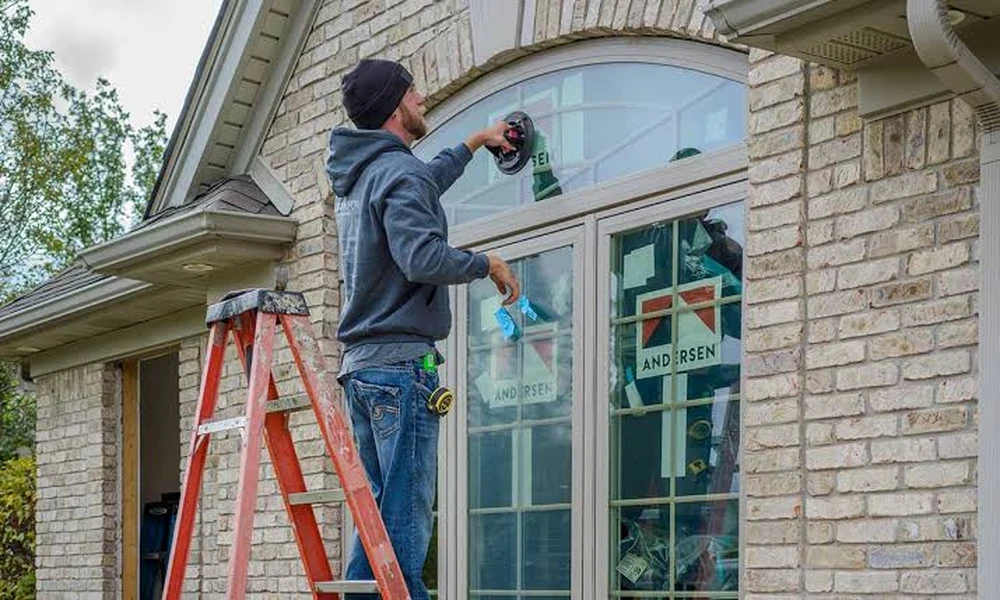
On installation day, the crew removes the old windows one at a time, so only a few openings are exposed at once. In homes built with block and stucco, each opening has to be cleaned up, sealed and flashed before the new frame goes in. The stucco around the edge is then patched or covered with trim. A good crew protects floors and furniture and hauls away the old units.
If the house was built before 1978, the crew should follow lead-safe practices, because old paint around frames can release dust when it’s disturbed. Ask about that before work begins.
Most average-sized homes are finished in one or two days. The final step is usually a permit inspection, followed by a walkthrough where you test every sash and lock.
Making a Confident Decision
Replacing windows is a big project, but it doesn’t have to feel like a gamble. Take your time and look for the warning signs room by room. Fix the problems that can still be fixed. When it’s clear replacement is needed, compare quotes on the same terms: the numbers on the performance label, the frame material, the installation method and the warranty. Homeowners who do that homework tend to end up with cooler rooms, lower bills and more peace of mind when a storm is in the forecast, and that’s the result worth paying for.
