

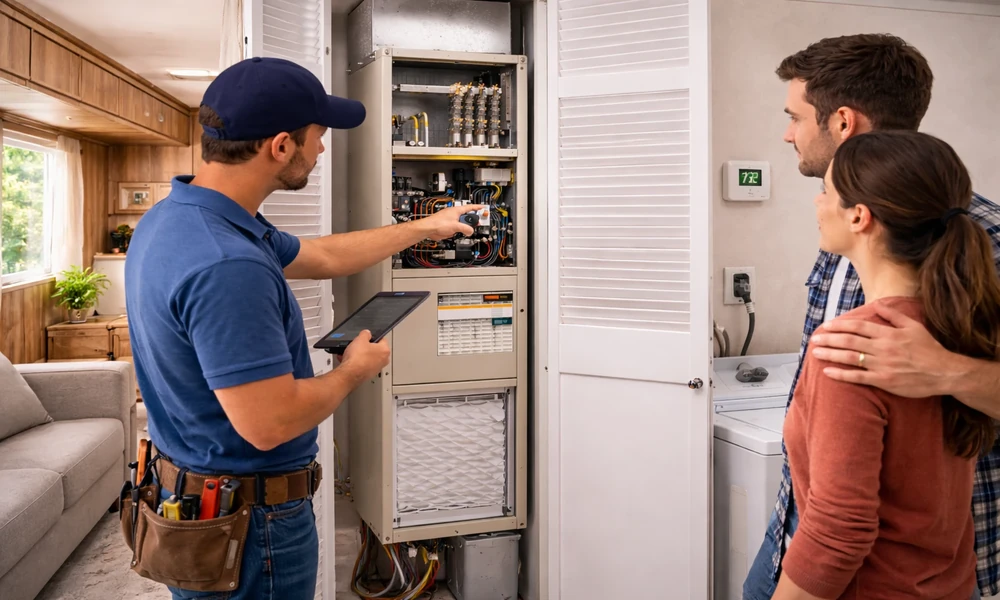
Picture a January cold snap along the southern tip of Lake Michigan. Wind off the water is pushing snow sideways, and inside a double wide in Portage the furnace clicks, hums and then gives up. The owner drives to a big box store, finds a furnace with the right BTU rating and expects the house to be warm again by evening. It won’t be. That standard unit cannot legally go into the closet where the old one sat, and the reason has nothing to do with brand or price.
Manufactured homes follow their own set of heating rules. Homeowners in Northwest Indiana who want help with them often turn to JG Heating and Cooling LLC, a family owned Portage company whose furnace work covers mobile home units as well as conventional systems, boilers and ductwork. Knowing what makes these furnaces different is the first step toward a repair or replacement that actually lasts.
The Federal Code Living Inside Your Utility Closet
Houses built on site follow local building codes. Manufactured homes built after mid 1976 follow the HUD Code, a federal standard that governs everything from wall framing to wiring. Its heating section is blunt. Under 24 CFR 3280.707, any heat producing appliance in a manufactured home must be listed or certified by a recognized testing agency specifically for manufactured home use. Fuel burning appliances must also vent to the outside.
That listing is not a formality. A furnace approved for manufactured housing is built for a compact, tightly enclosed home. Most are sealed combustion units. They pull the air they burn from outdoors through a roof jack or floor connection and push exhaust back out through the same assembly, so nothing inside the living space feeds the flame. In a home where the furnace closet might sit a few feet from a bedroom door, that separation is a serious safeguard against carbon monoxide.
Built to Blow Downward
Most basement furnaces push warm air up. Mobile home furnaces usually do the opposite. They are downflow units that sit on a base over an opening in the floor and send heated air into a main trunk running the length of the home inside the underbelly. Many are slim enough to fit a hallway closet, and the closet door often serves as the return air path through a louvered panel or grille.
This design saves space, but it creates weak points that homeowners rarely think about.
- Stored boxes, vacuums or coats block the return grille. That starves the blower of air and makes the high limit switch trip again and again.
- The filter is often an odd size and sits somewhere unexpected, sometimes behind the closet door rather than in a slot on the cabinet.
- In double and triple wides, a flexible crossover duct joins the trunk lines of each section underneath the home. When it sags, tears or comes loose, heat pours into the crawlspace instead of the living room.
- Animals or weather can tear the belly wrap that protects the ducts, which lets cold air and rodents in around the trunk.
When the Cold Sits Right on Top of the Ductwork
Winter in Portage and the nearby Porter County and Lake County communities is especially hard on manufactured homes. The ductwork lives beneath the floor, so it sits in the coldest air the house touches. A small duct leak in a site built home might cost a few dollars a month. Under a mobile home, a crossover duct that has fallen to the ground during a week of single digit temperatures can leave the far bedrooms unlivable while the furnace runs nonstop.
Lake effect snow adds another problem. Sealed combustion units depend on a clear roof jack or wall vent. Heavy drifts or ice around the intake can choke the burner of air, and many modern units shut down rather than run unsafely. If a furnace quits during a storm and restarts once the weather clears, the trouble is usually in its venting rather than its controls.
Reading the Data Plate Before Buying Anything
Every HUD Code home has a data plate. It is usually inside a kitchen cabinet, a bedroom closet or near the electrical panel. It lists the manufacturer, the serial number and the thermal zone the home was built for. HUD divides the country into three zones, and northern states like Indiana fall into the coldest one, Zone 3, which calls for more insulation. The plate may also name the original heating appliance and the home’s heat loss figures.
This matters when you replace the furnace. A furnace sized for a Zone 3 home differs from one meant for a single wide in Georgia, and the plate gives a technician a starting point based on how the house was actually built. A load calculation should still happen, because decades of window swaps, added rooms or new skirting change the picture. The plate just keeps the guesswork honest.
Gas, Propane or Electric
Fuel choice shapes every mobile home heating decision. Natural gas units are common where a utility line reaches the community. Homes on rural lots often run on propane. A propane furnace needs the correct conversion kit and orifices, so you can’t just hook a gas furnace to a propane tank. Electric furnaces heat with resistance strips instead of a flame, so they need no venting. In a northern Indiana winter, though, they usually cost more to run.
Some owners pair the furnace with a heat pump or central air system that shares the same duct trunk. In those setups the furnace blower also moves the cooled air in summer. A weak blower or dirty coil then shows up as poor cooling as much as poor heating.
Repair Signals Worth Taking Seriously
Small furnaces develop the same problems as bigger ones. A dirty flame sensor lets the burner light and then shuts it off within seconds. A cracked hot surface igniter means clicking with no flame. Short cycling often comes from a blocked return grille or a clogged filter tripping the limit switch. Each of these is a fairly routine fix for a technician who knows manufactured housing.
Other symptoms need faster attention. Shut the system down and call for service if you see soot around the closet door, notice a sharp burning smell that lasts past the first run of the season, find water pooling under a high efficiency unit or hear the carbon monoxide alarm. Every manufactured home with a fuel burning furnace should have a working CO alarm near the sleeping areas. Testing it each month takes seconds.
Repair or Replace in a Home That Ages Differently
Furnaces in manufactured homes generally last fifteen to twenty years with decent care. Age is only one factor in deciding whether a repair still makes sense. Can you still get replacement parts for that model? Is its efficiency far below what newer units offer? And has anyone inspected the ductwork underneath? A new furnace connected to a torn crossover duct will disappoint just as much as the old one did.
Older mobile home furnaces from names like Intertherm, Miller and Coleman still run in plenty of Indiana communities. Parts for some of them are getting scarce, and once a heat exchanger cracks, replacement is the only safe option. When that day comes, the new furnace must carry the manufactured home listing. It also has to match the existing floor opening or be properly adapted to it, and it must tie into a roof jack rated for that model.
The Takeaway Tucked Under the Floor
The heating system in a mobile home is really three parts working together. There is a furnace built under federal rules, a duct system in the coldest corner of the house and a venting path exposed to whatever weather the lake brings. Homeowners who keep the closet clear, check the belly and vents after storms and insist on a properly listed unit when it’s time to replace tend to get through long Indiana winters without a panicked January call. The furnace may be smaller than the one in a basement down the street, but it needs just as much care.
